IRS Schedule C 1040 PDF Template
IRS Schedule C 1040 PDF Template
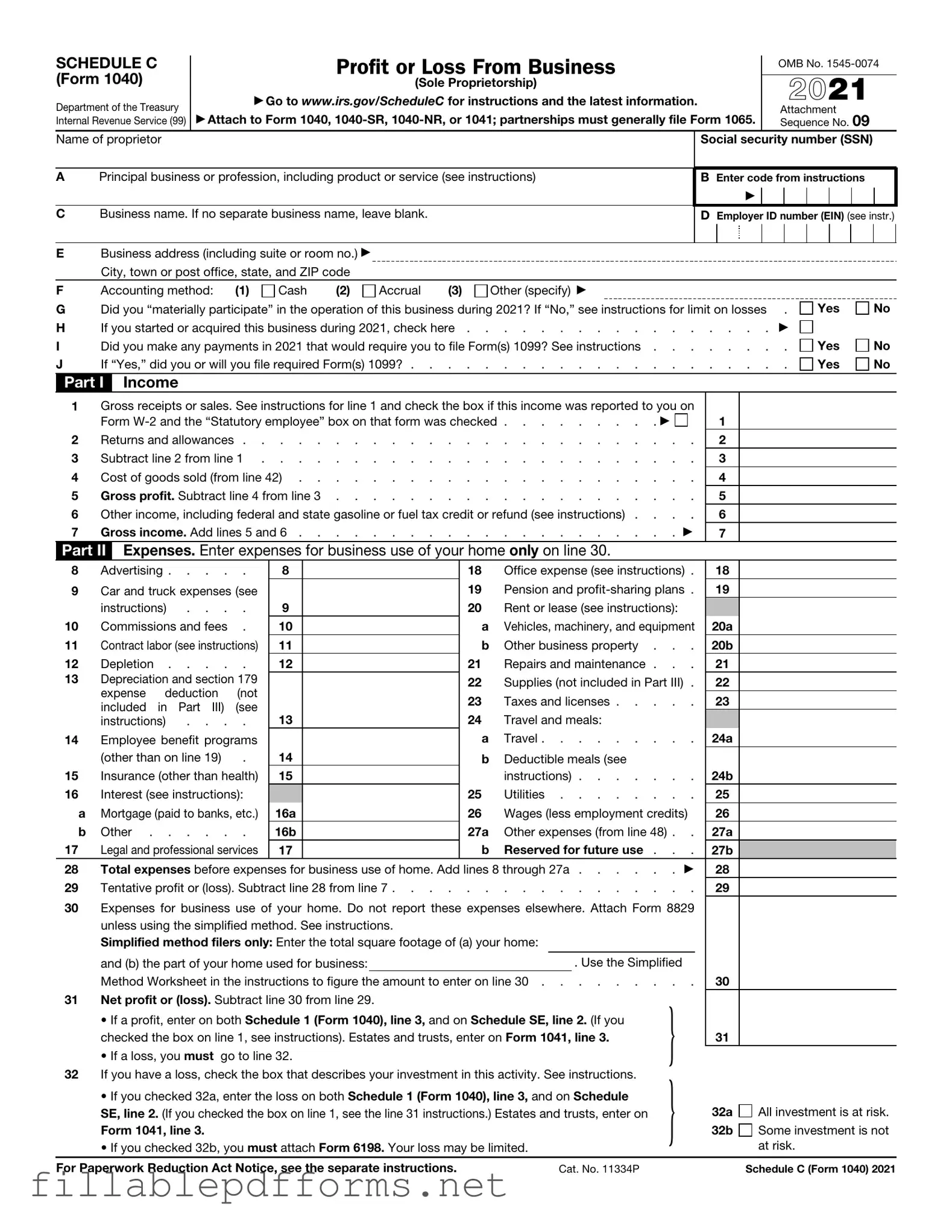
When it comes to filing taxes as a sole proprietor, understanding the IRS Schedule C (Form 1040) is essential. This form serves as a detailed report of your business income and expenses, allowing you to calculate your net profit or loss for the year. By completing Schedule C, you provide the IRS with a comprehensive overview of your business operations, including the types of products or services you offer, your gross receipts, and the costs associated with running your business. Additionally, it allows you to claim various deductions that can significantly reduce your taxable income, such as expenses for supplies, utilities, and even home office costs if applicable. Whether you're a freelancer, a small business owner, or an independent contractor, mastering the nuances of Schedule C can empower you to take control of your tax situation and ensure compliance with federal regulations. This form not only plays a critical role in your tax return but also serves as a financial snapshot of your business, helping you make informed decisions for future growth.
Not keeping accurate records. Many individuals underestimate the importance of maintaining detailed records of their business income and expenses. Without proper documentation, it becomes challenging to support the figures reported on the Schedule C form.
Mixing personal and business expenses. It is crucial to keep personal and business finances separate. Failing to do so can lead to confusion and inaccuracies when reporting expenses, which may trigger questions from the IRS.
Overlooking deductions. Some taxpayers miss out on valuable deductions because they are unaware of what qualifies. Common deductions include home office expenses, vehicle use, and certain business-related supplies.
Incorrectly reporting income. It's essential to report all sources of income accurately. Some individuals may forget to include cash transactions or income from side gigs, which can lead to discrepancies.
Failing to sign and date the form. It may seem minor, but not signing or dating the Schedule C can result in processing delays or rejection of the tax return. Always double-check that all required signatures are present.
Ignoring deadlines. Missing the filing deadline can lead to penalties and interest on any taxes owed. It is vital to be aware of the tax calendar and plan accordingly to avoid last-minute rushes.
Understanding the IRS Schedule C (Form 1040) can be challenging. Here are some common misconceptions that people may have about this form:
Being aware of these misconceptions can help you navigate the complexities of filing your taxes more effectively. If you have further questions, consider reaching out to a tax professional for personalized guidance.
Filling out the IRS Schedule C (Form 1040) is a straightforward process that allows self-employed individuals to report income and expenses from their business. Accurate completion of this form is essential for proper tax reporting. Below are the steps to guide you through the process.
After completing the form, it is essential to review all entries for accuracy. Keep a copy for your records and submit the form along with your tax return by the designated deadline.
When filling out the IRS Schedule C (Form 1040), it is essential to follow certain guidelines to ensure accuracy and compliance. Here’s a list of what you should and shouldn’t do:
By following these guidelines, you can help ensure a smoother filing process and reduce the risk of errors that could lead to complications with the IRS.
Chart in Ms Word - Note-taking format: Effective structure for capturing information during lectures.
Creating a comprehensive estate plan is vital, and one of the central components is the Florida Last Will and Testament form, which allows individuals to articulate their final wishes clearly. This essential document not only addresses asset distribution and the care of minor children but also provides invaluable guidance to executors and family members. For those looking to establish or update their will, the form can be accessed and printed at https://floridaformspdf.com/printable-last-will-and-testament-form/, ensuring peace of mind for both the testator and their loved ones.
Cg2010 Additional Insured Endorsement - Only specified additional insureds and locations receive coverage under this endorsement.
When filling out and using the IRS Schedule C (Form 1040), it's important to understand the key components to ensure accurate reporting of your business income and expenses. Here are some essential takeaways:
Understanding these points can help ensure compliance and maximize your tax benefits when using Schedule C.